
Ford Dunton Technical Centre: Engine Test Bed Installation
Modernising Ford’s Dunton Technical Centre engine testing protecting quality, safety, and revenue.

PART ONE
Engine Test Bed Upgrade
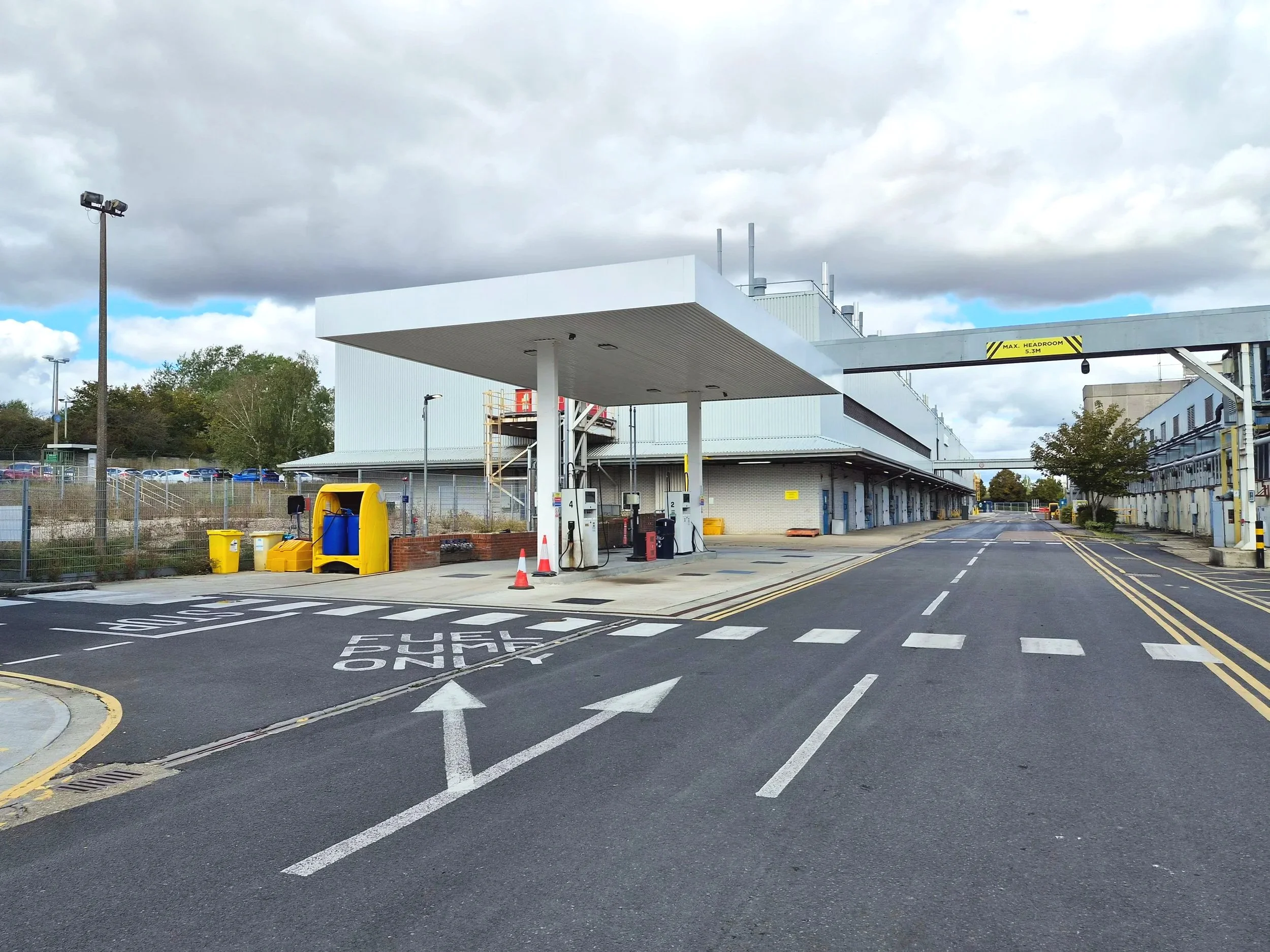
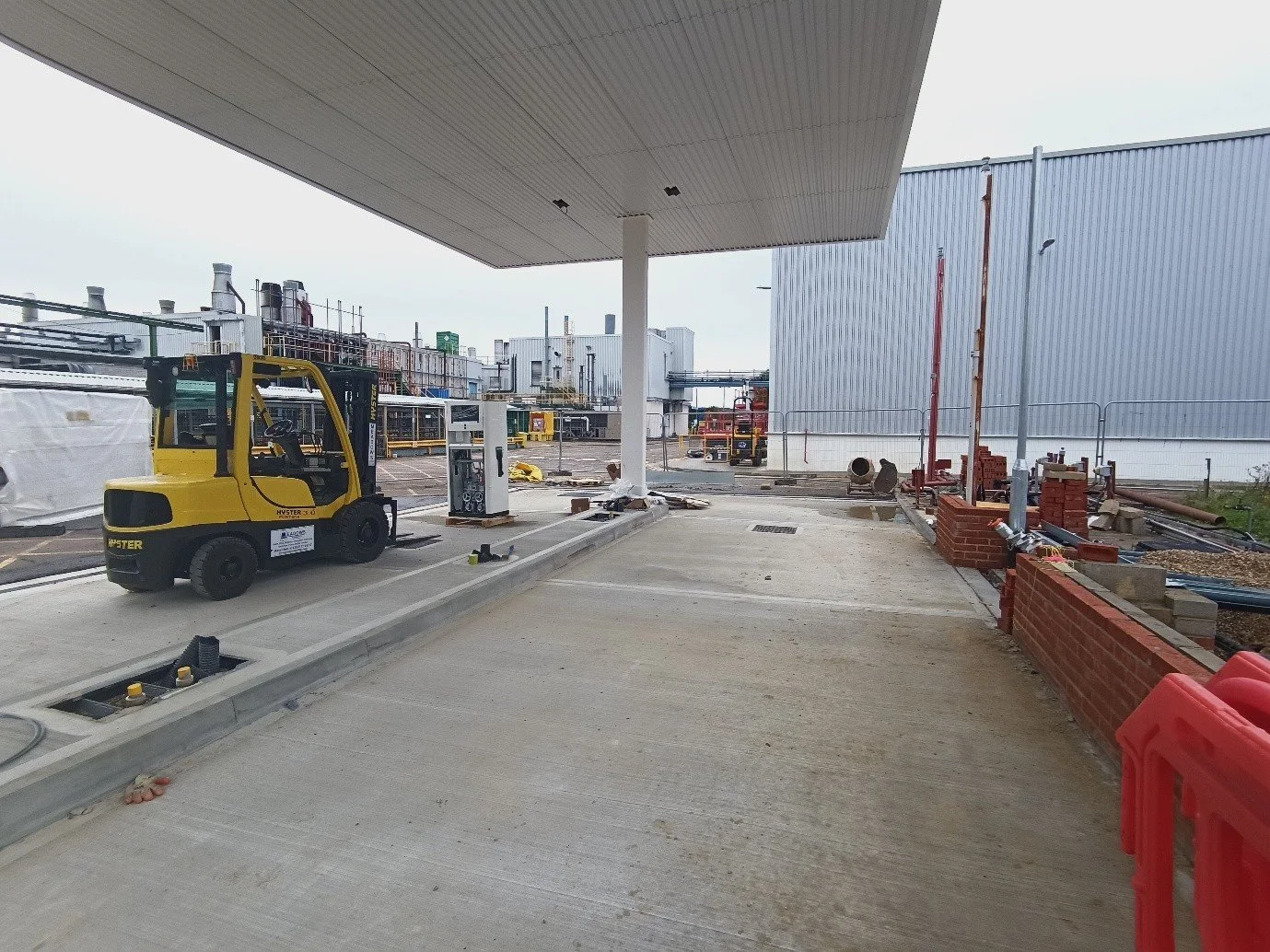
Meson was appointed by Vertex to deliver the electrical control systems for a major fuel system upgrade at Ford’s Dunton Technical Centre, one of Ford’s flagship UK engine research and development facilities.
The existing fuel distribution system, dating back over 50 years, supplied multiple engine test cells via gravity-fed header tanks and ageing underground pipework. Over time, the system was due an update to maintain fuel supply & quality, and reduce the likeliness of commercial and safety risks.
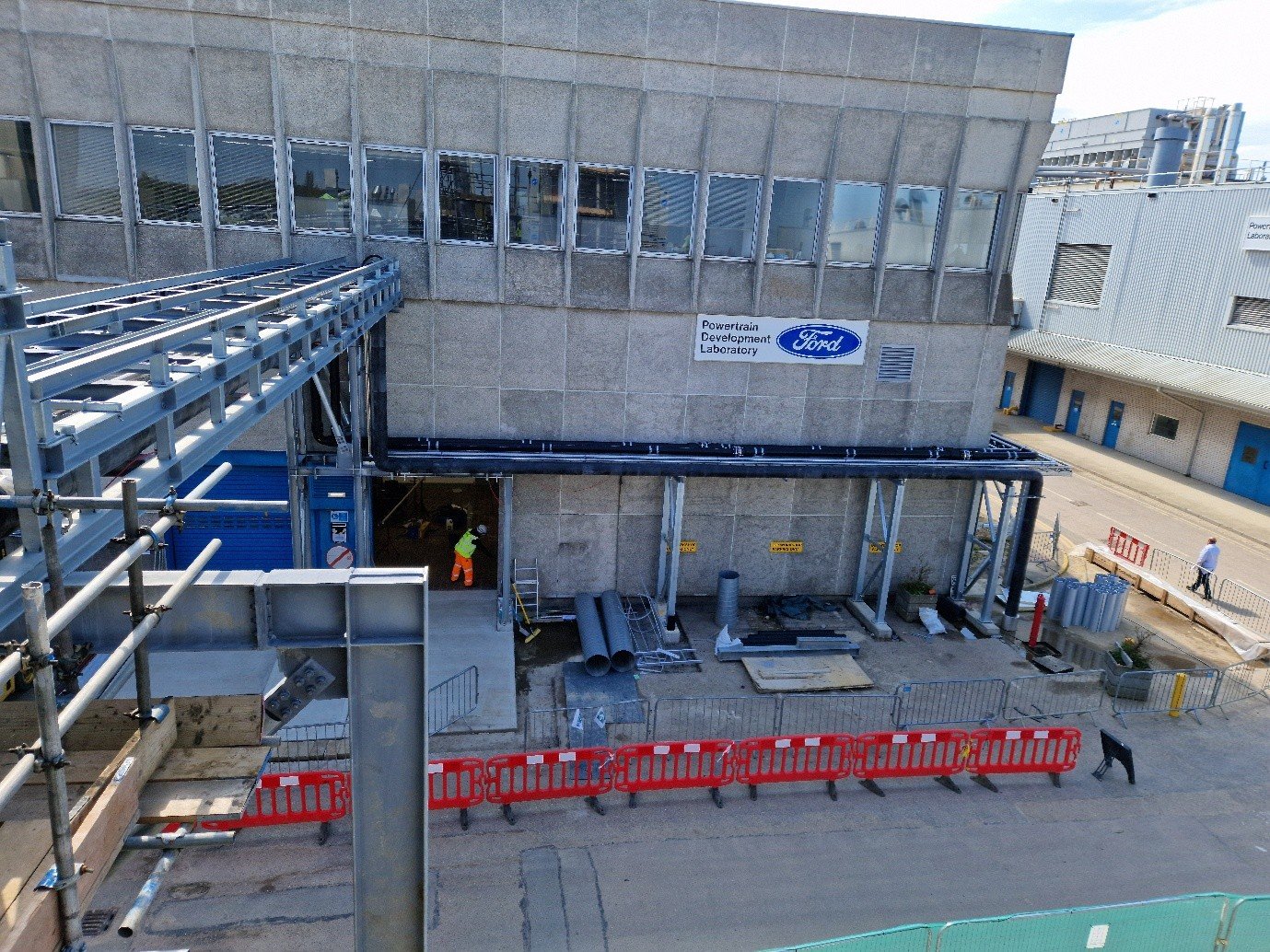
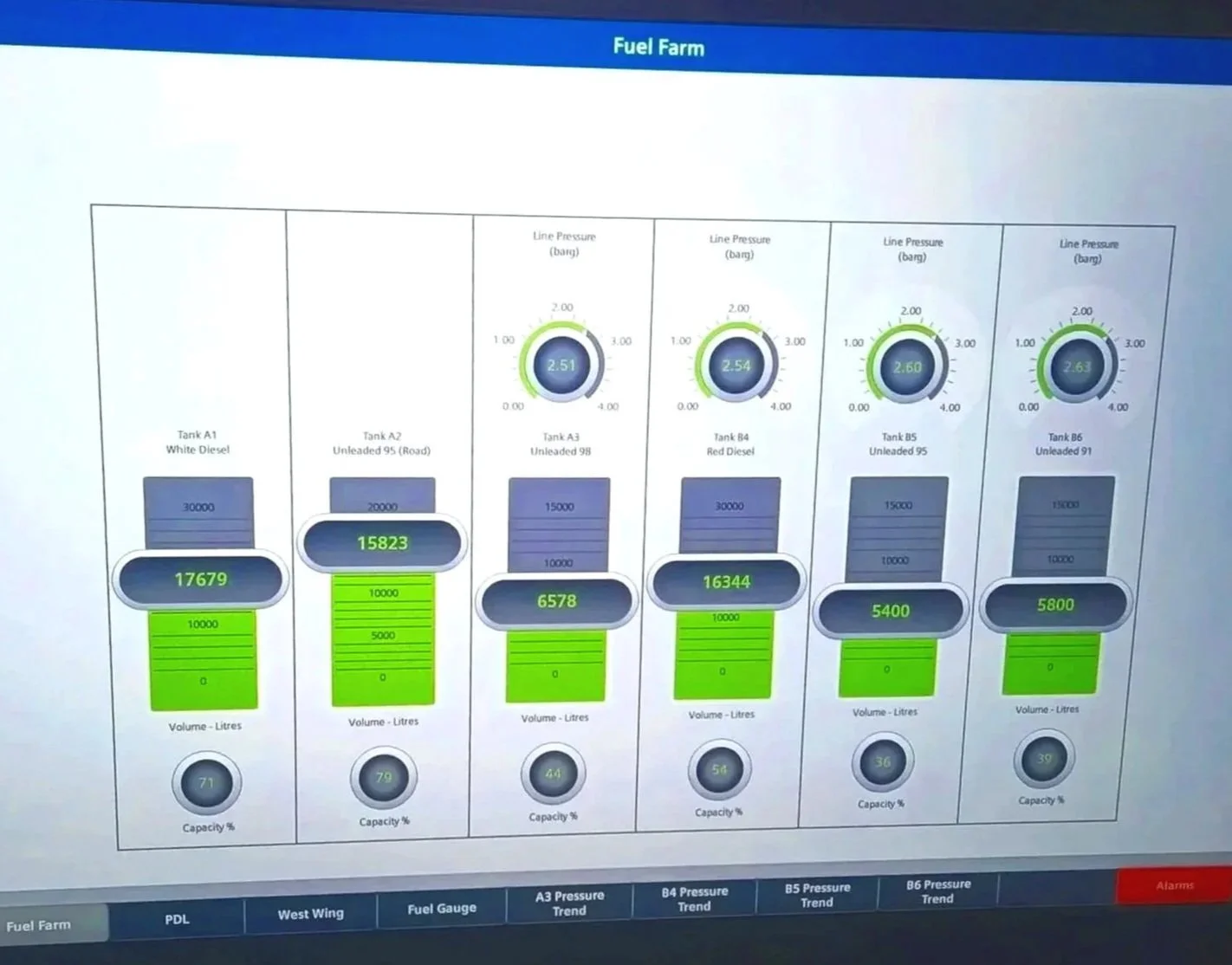
Working alongside the mechanical and other specialist partners, Meson helped to design, implement, and commission a modern, demand-driven fuel farm to reliably supply clean fuel at tightly controlled pressure to approx. 35 engine test cells, without disrupting Ford’s busy testing programme.
The Challenge
Ford’s original fuel system relied on below ground bulk tanks pumping fuel up to elevated header tanks, which then gravity fed the engine test cells. Decades of use meant the pipework was rusted and degraded, causing:
Fuel contamination risk – active risk of particulates and corrosion products entering the fuel stream, potentially leading to failed fuel quality checks.
Commercial impact – Ford not only ran their own programmes, but also rented out test beds to third parties. Any aborted test due to fuel quality could mean lost revenue, wasted engineering time, and reputational damage.
Safety Risks – ageing infrastructure increased the chances of leaks and could lead to challenges around pressure management, alarm handling, and safe shutdown in the event of a fire.
Ford needed a fully modernised fuel system that would:
Deliver clean fuel at a stable, controlled pressure to a large number of test cells.
Integrate robust safety and environmental protections, approved by the petroleum officer and environmental agency.
Be installed and commissioned without shutting down the entire facility, to avoid major disruption to testing and revenue.
Provide a platform that would remain viable for many years, even as the wider industry transitions towards electrification.
The project also presented significant delivery challenges:
Complex mechanical design interfaces – The fuel farm relied on submersible pumps, line isolation, drain-back lines, and pressure control valves. Mechanical design was critical to ensure electrical control worked as intended
Tight shutdown windows – The goal was not to take the whole facility offline for a duration of time. New pipework and cabling had to be installed alongside the live system, with staged changeovers of typically 4–8 test cells at a time, often over a single weekend.
On-site demands – The works ran over approximately 18 months, with Meson team on site for around a year, frequently working long hours, nights, and weekends, often away from home.
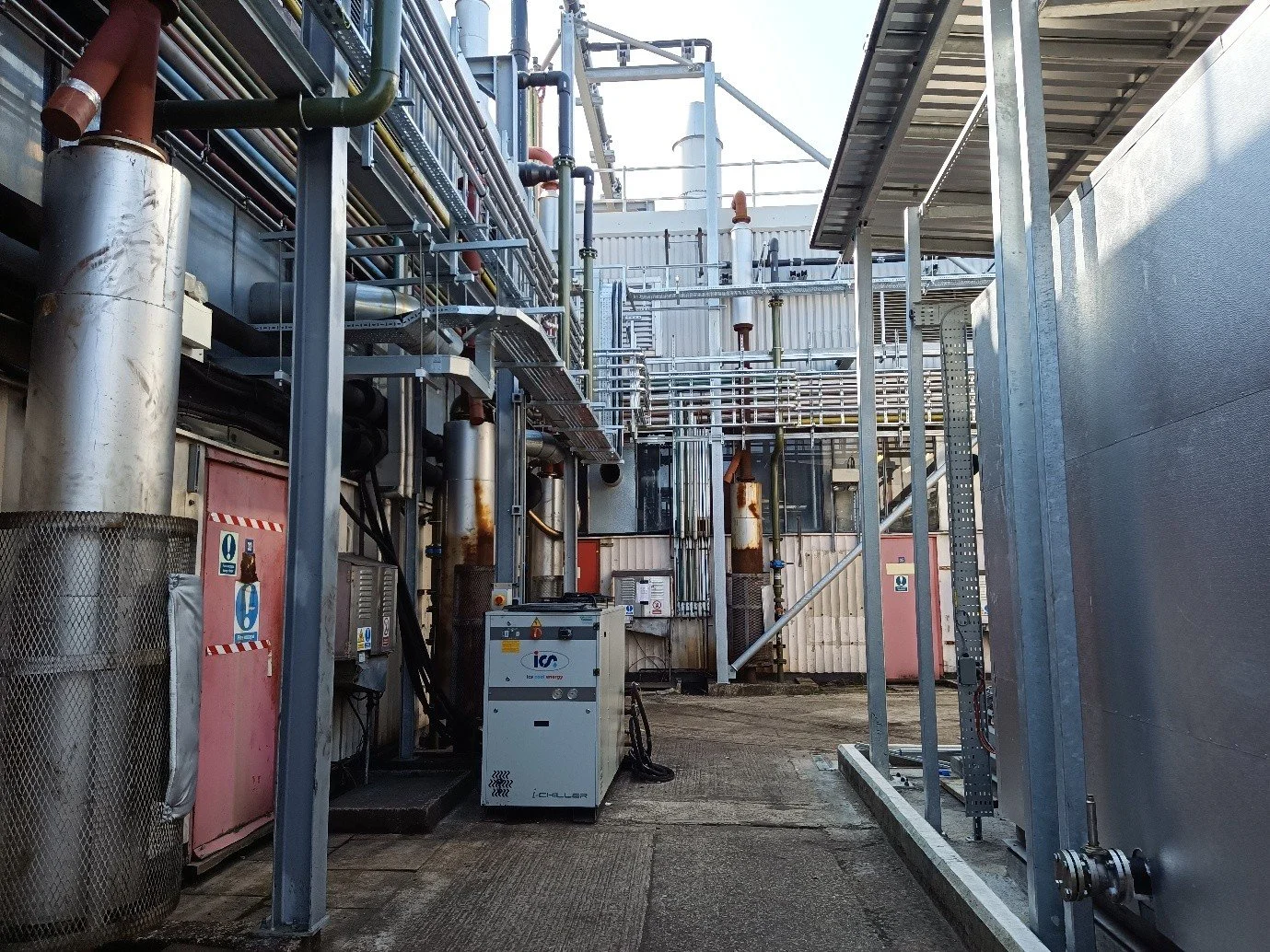
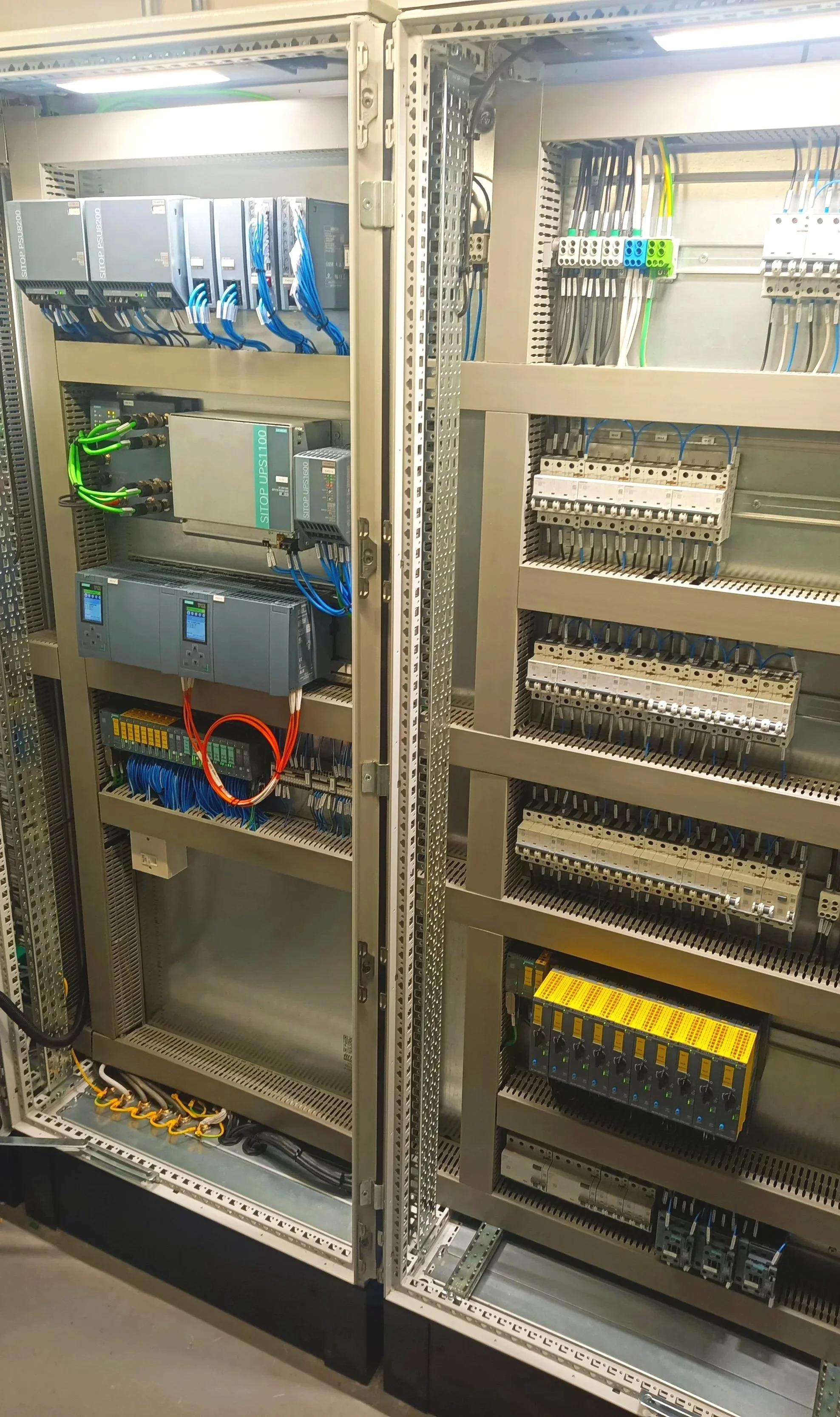
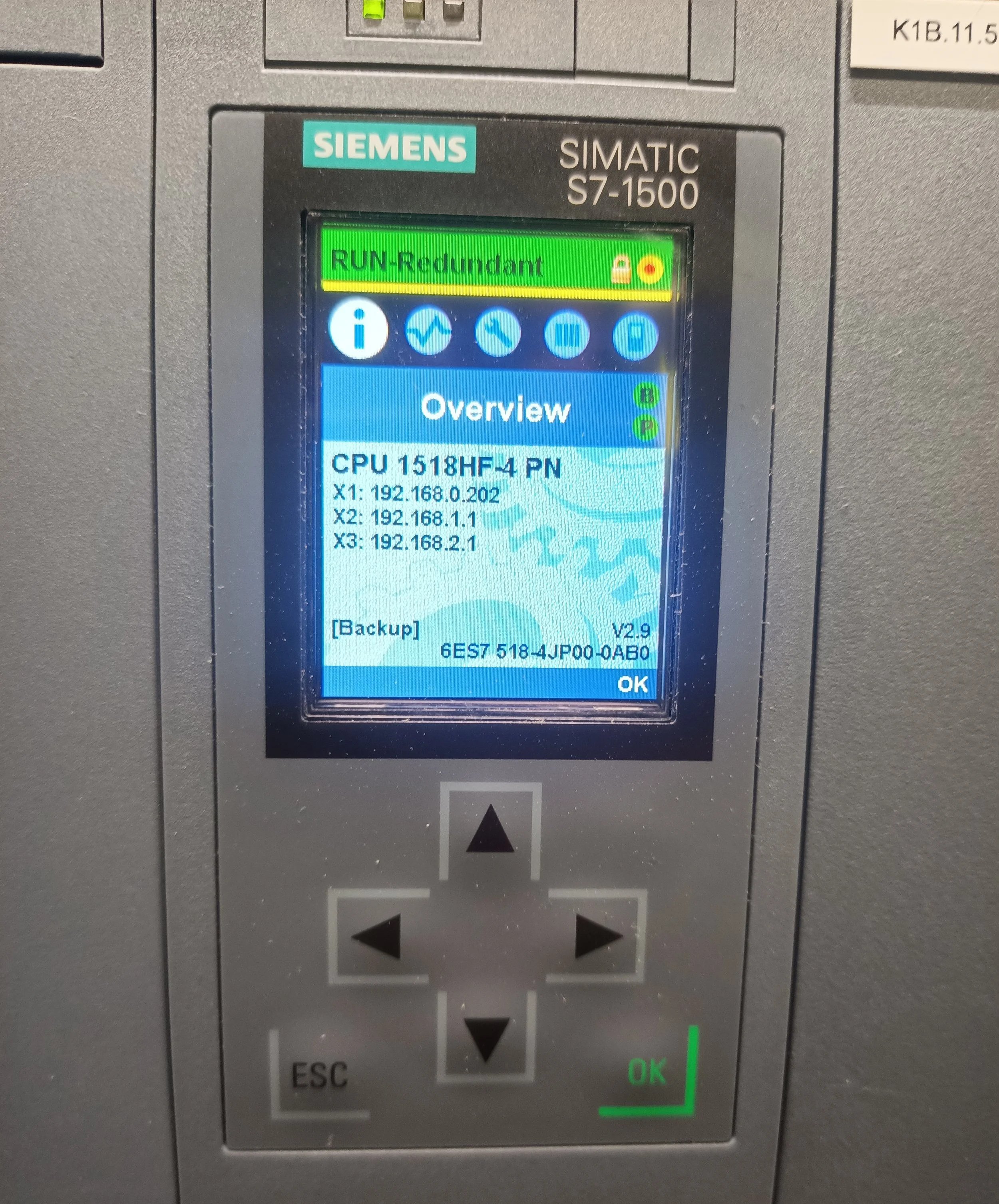
Cutting-edge control hardware – The system used Siemens S7-1500 redundant safety PLCs, some of the first of their kind in the UK. Early firmware limitations meant Meson were effectively helping to identify and work around these challenges in the latest technology while still delivering a reliable live system.
Despite these pressures, Ford required a solution that worked safe, with reliable fuel delivery, minimal disruption, and a partner team they could trust to manage issues collaboratively rather than simply protecting contractual positions.
Ready to Talk to Our Team Today?
PART TWO
Technical Solution
From an initial feasibility study, Meson developed the controls philosophy, cause-and-effect matrices, and safety strategy for a new tank farm with submersible pumps, operating as a supply-and-demand system:
Closed-loop pressure control
The new design removed dependence on gravity-fed header tanks.
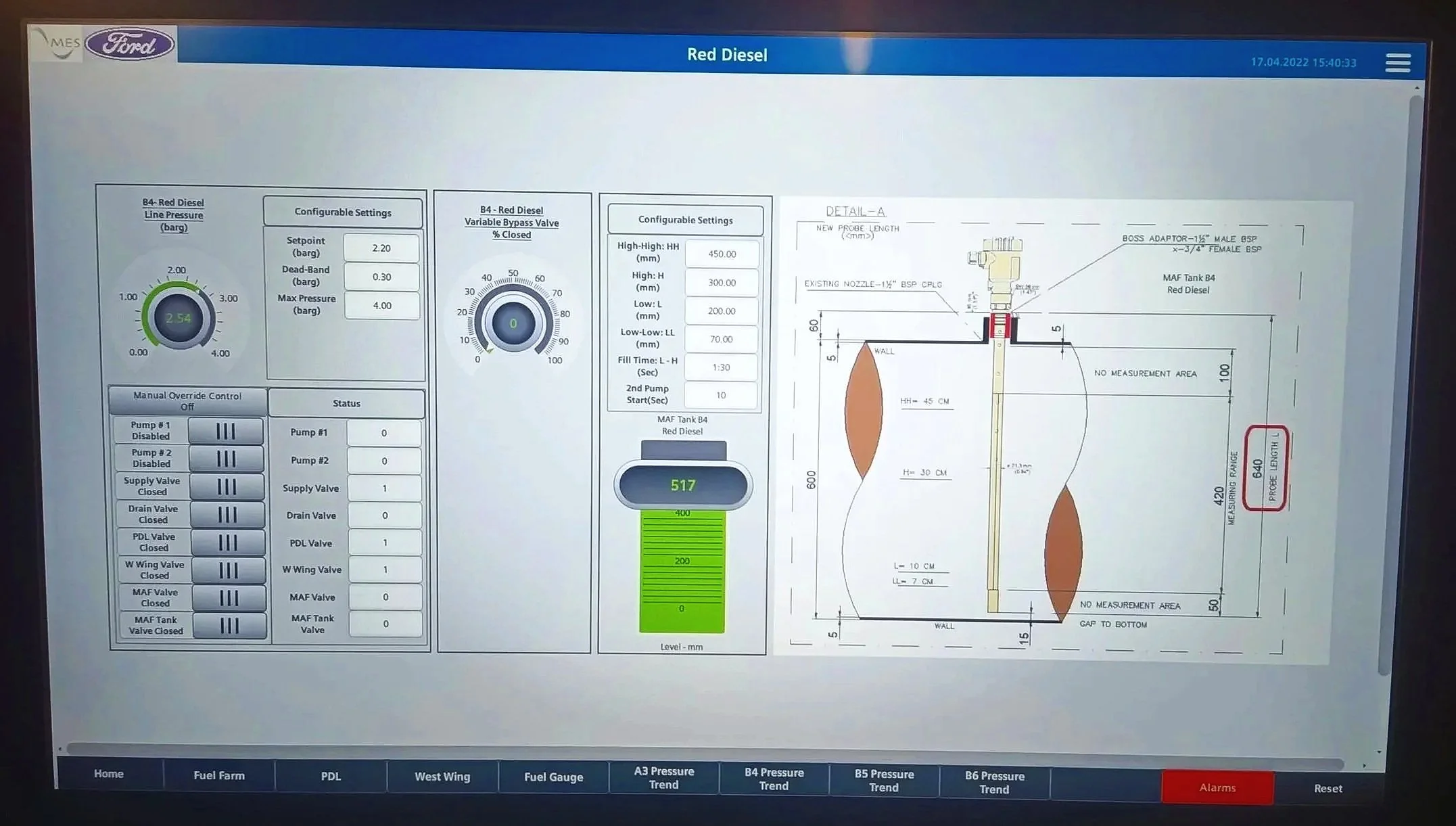
Meson implemented a PID-based control loop using pressure transmitters, variable control valves, and speed-controlled submersible pumps to maintain a tight pressure tolerance at each test cell.
Safety and environmental protection
Integrated drain-back to tank functionality for safe depressurisation.
Automatic pressure reduction and shutdown logic in response to fire alarms or emergency stop events.
Leak detection on pipework and tanks, designed to meet petroleum officer and environmental agency requirements.
Fuel distribution flexibility
Multiple fuel grades (various petrols and diesels) are distributed around the building.
Outside each test cell, a cluster box provides connections for different fuel lines, allowing users to select the required grade via manual valves while the control system guarantees pressure and safety.
The feasibility and controls design were reviewed and successfully approved by regulatory stakeholders, paving the way for full project tender and award.
Collaboration & supply chain
A key feature of Meson approach is relationship management and constructive challenge:
When the team needed guidance on valves, solenoids, and instrumentation, Meson introduced them to the their supply network, aligning electrical and mechanical specifications and ensuring the right equipment was selected.
Similar proactive input has been provided on other projects (e.g. Red Bull, Warwick University’s Advanced Propulsion Research Laboratory), where Meson have constructively contributed to mechanical concepts and suggested sometimes simpler, more robust fuel system architectures.
This willingness to offer honest, technically grounded feedback has helped build long-term, trust-based relationships with mechanical partners, suppliers, and end clients.
Thinking about your Next System? Give us a Call:
Delivery & Results
Despite the technical and programme challenges, the project delivered:
A modern, reliable fuel farm supplying clean fuel at controlled pressure to around 35 engine test cells.
Significant improvement in fuel quality reliability, reducing contamination risk and safeguarding the integrity of engine test data.
Minimal disruption to Ford’s testing schedule, with phased changeovers and weekend works allowing testing to continue across much of the facility.
A proven controls platform based on redundant safety PLCs
The upgraded system has continued in use well beyond early expectations, underpinning Ford’s ongoing combustion engine and hybrid development programmes, and providing a robust, future-proofed infrastructure.
JAMES HENNIGAN - MANAGING DIRECTOR
“This project demanded real flexibility and persistence from the team over a long period. We worked long hours, weekends and even through key public holidays, constantly adapting to changing test schedules and still delivering what Ford needed, when they needed it. That resilience and willingness to go the extra mile is what really made this project a success.”

Speak to our team today.
WHO WE ARE

Our Goals

Team Values

Case Studies

News & Blogs